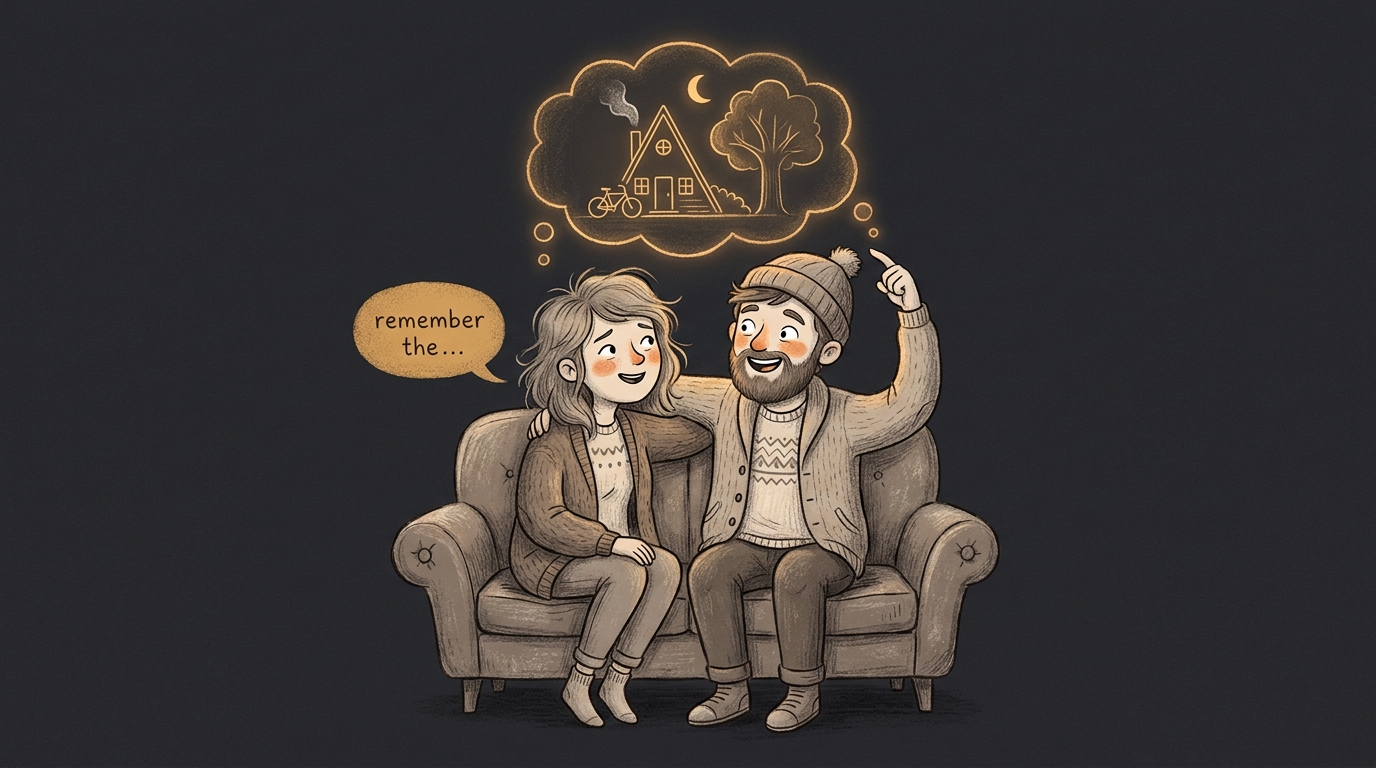
"The usual?"
You walk into your regular coffee place and the barista just says, "The usual?" Three syllables, and somehow they contain a medium oat-milk flat white, no sugar, in the blue cup if it's clean. You text a friend "you up?" at 11pm and they know it's not a question about your circadian rhythm — it's an invitation. Your partner starts a sentence and you finish it, and you're not psychic; you've just heard the first half of that thought a hundred times.
We do this constantly, and we barely notice. Most of what we say to the people close to us is half-said on purpose. The words are the small visible part; the rest gets supplied silently by everything the two of you already know.
Then you open a chat with an AI, type the same kind of half-sentence, and get back something confidently, bafflingly wrong. The natural reaction is to think the AI is dim. It isn't. It's just the first listener in your life who walks in with zero history.
The iceberg under every sentence
Linguists have a name for the silent part. They call it common ground — the pile of stuff two people mutually know and mutually know that they know. When you say "the usual," you're not really being lazy; you're trusting that the rest of the order is already sitting in the shared pile, so you don't have to say it out loud.
There's a tidy principle behind this, courtesy of the philosopher Paul Grice: in conversation, we cooperate. We say just enough and trust the listener to fill in the rest sensibly, rather than spelling out every obvious thing like a robot reading a manual. Imagine actually saying, "Hello, person I have met before, I would like the beverage I order on most weekday mornings, prepared in the manner you have prepared it on prior occasions." Nobody talks like that, because nobody has to. The shared pile does the heavy lifting.
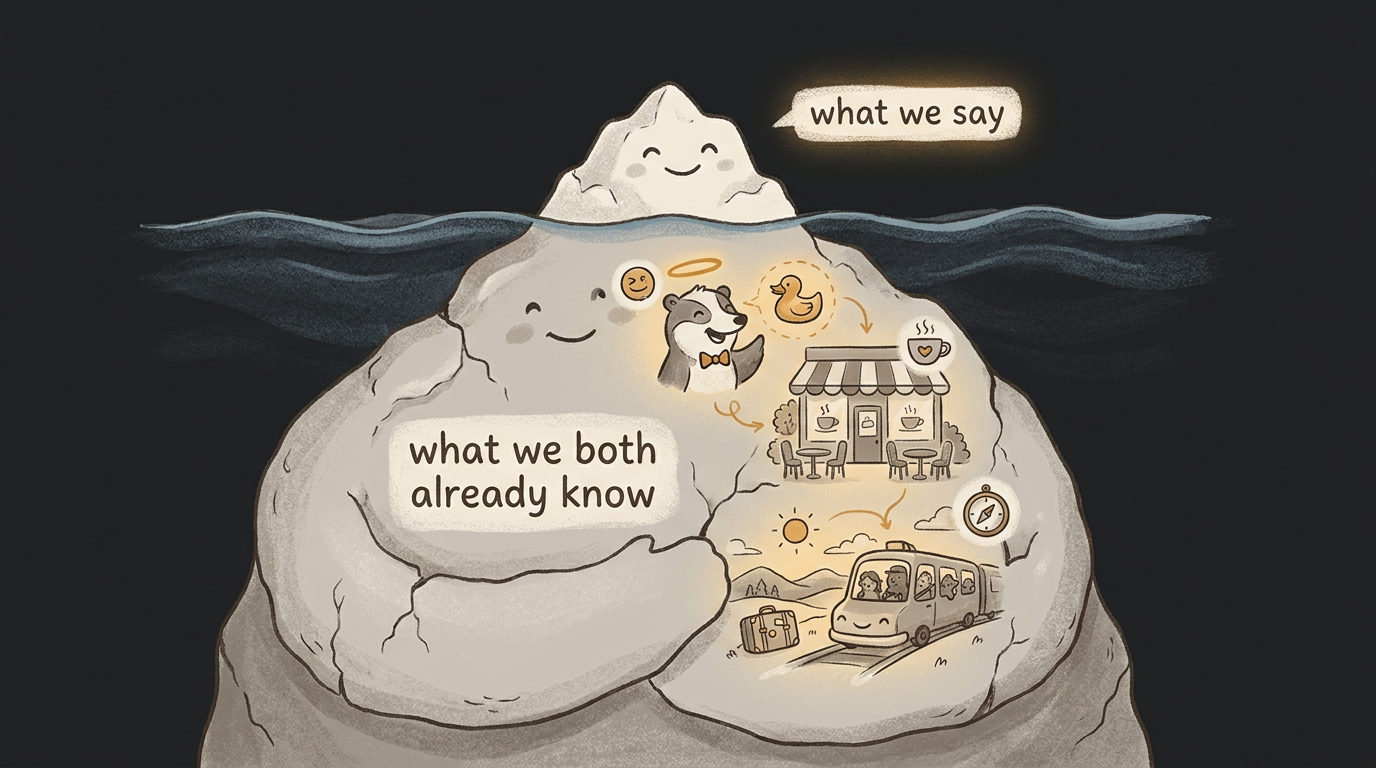
So the words you actually type are the tip of the iceberg. The enormous mass under the waterline — who you are, what you're working on, what you meant last time, what you'd obviously never want — is the part you never have to say, because the other person already carries it.
Your friend fills the gaps. The AI can't.
Here's the quietly surprising bit: this means humans have always been doing a kind of prompt engineering. Every time you talk to someone, you make a split-second estimate of how much you can leave unsaid. You'd never explain an inside joke to the friend you invented it with — but you'd unpack it for a stranger. You shorten with people who share your context and spell things out for people who don't. That calibration is a skill. You're just so good at it that it feels like nothing.
An AI is the ultimate stranger. It has read an enormous amount of the internet, but it has read exactly none of you. It doesn't know which login bug you mean, which "report" you're talking about, or that "make it pop" means something specific in your team. The iceberg under your sentence — the part your friend fills in for free — simply isn't there. So whatever you leave unsaid, the AI has to guess. And it guesses with whatever's statistically average, which is rarely what you actually had in mind.
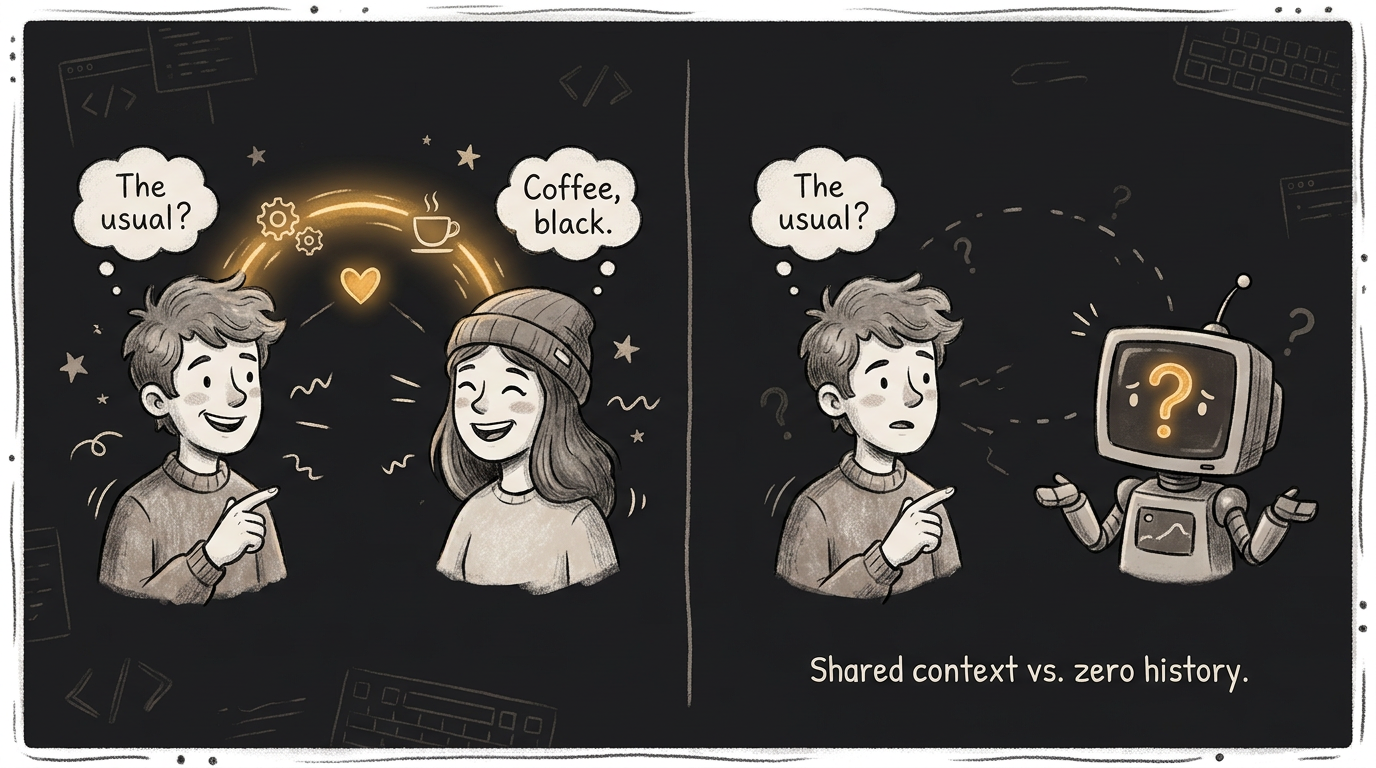
That's the whole trick, and it's weirdly freeing once you see it. Talking to an AI isn't some exotic new literacy. It's the same thing you already do with strangers — say more, assume less — turned up to maximum. The skill isn't new. It's just newly visible, because for the first time you're talking to a listener with no shared history to lean on.
So just say the quiet part
Which makes "good at AI" much less mysterious than it sounds. It's mostly the discipline of putting the iceberg into words: what you're actually trying to do, what "done" looks like, what to steer clear of — the stuff a close colleague would already know, so you'd never bother saying it. The annoyance is precisely that it feels like over-explaining. You're not used to narrating the obvious, because for your whole life the other person already had it.
This is the gap AgentForge quietly fills. You describe what you want the way you'd say it to a friend — short, human, half-finished — and it supplies the missing shared context underneath, turning your half-sentence into the full, spelled-out version a coding agent actually needs. You get to keep talking like a person. It handles the part where you'd otherwise have to remember that this particular listener knows nothing about you.
So the next time an AI fumbles something a friend would've caught in a heartbeat, don't take it personally on the AI's behalf. It's not slower than your friend. It just walked in without the iceberg — and now you know exactly what it's missing.