Two prompts, two very different afternoons
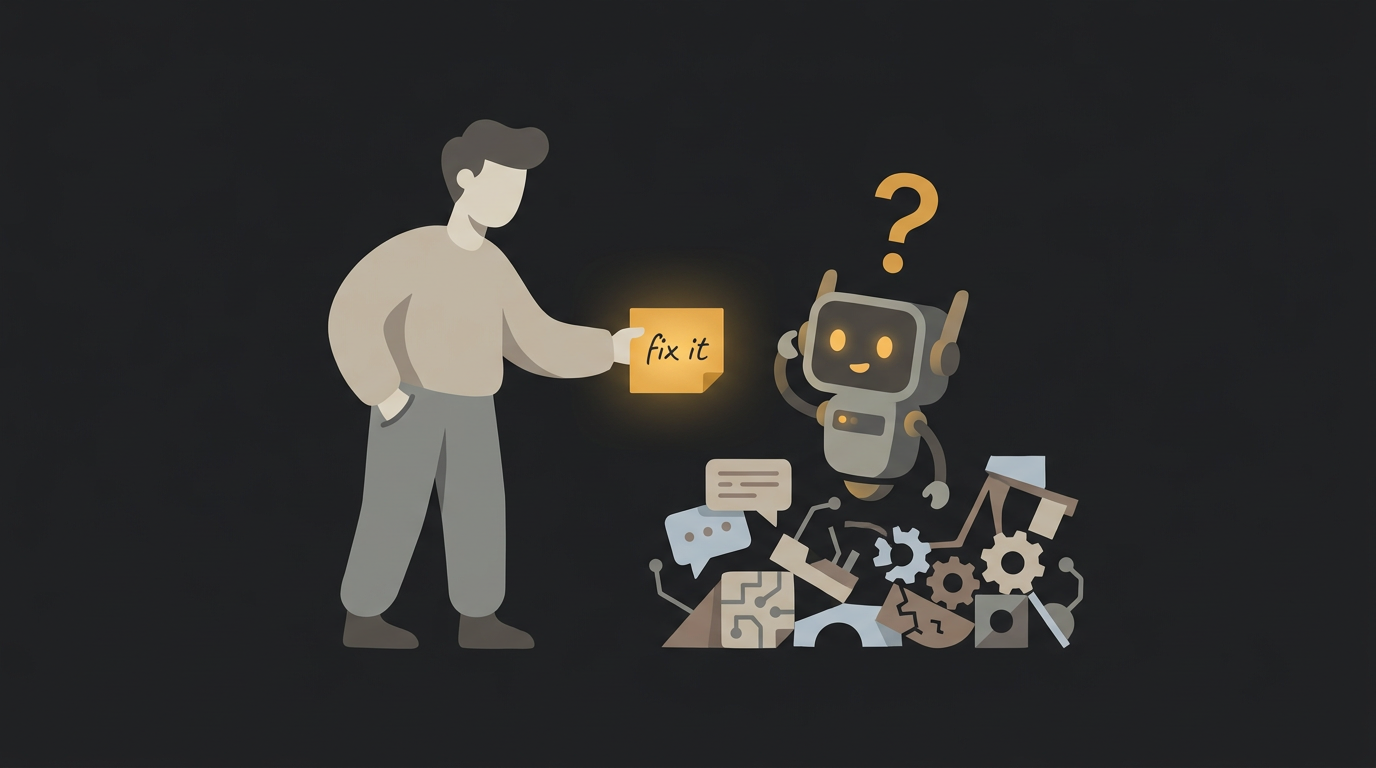
Here's a scene anyone who uses an AI coding agent will recognize. You ask it to "fix the login bug." Twenty minutes later it has confidently rewritten half your auth code — fixing a bug you didn't have, in a way you didn't want, in a framework you're not even using.
That's not the model being dumb. It did exactly what you asked: it found a login problem and shipped a fix. You just never said which bug, which approach, or what not to touch — so it guessed. And guessing at the scale of an auth rewrite rarely ends well.
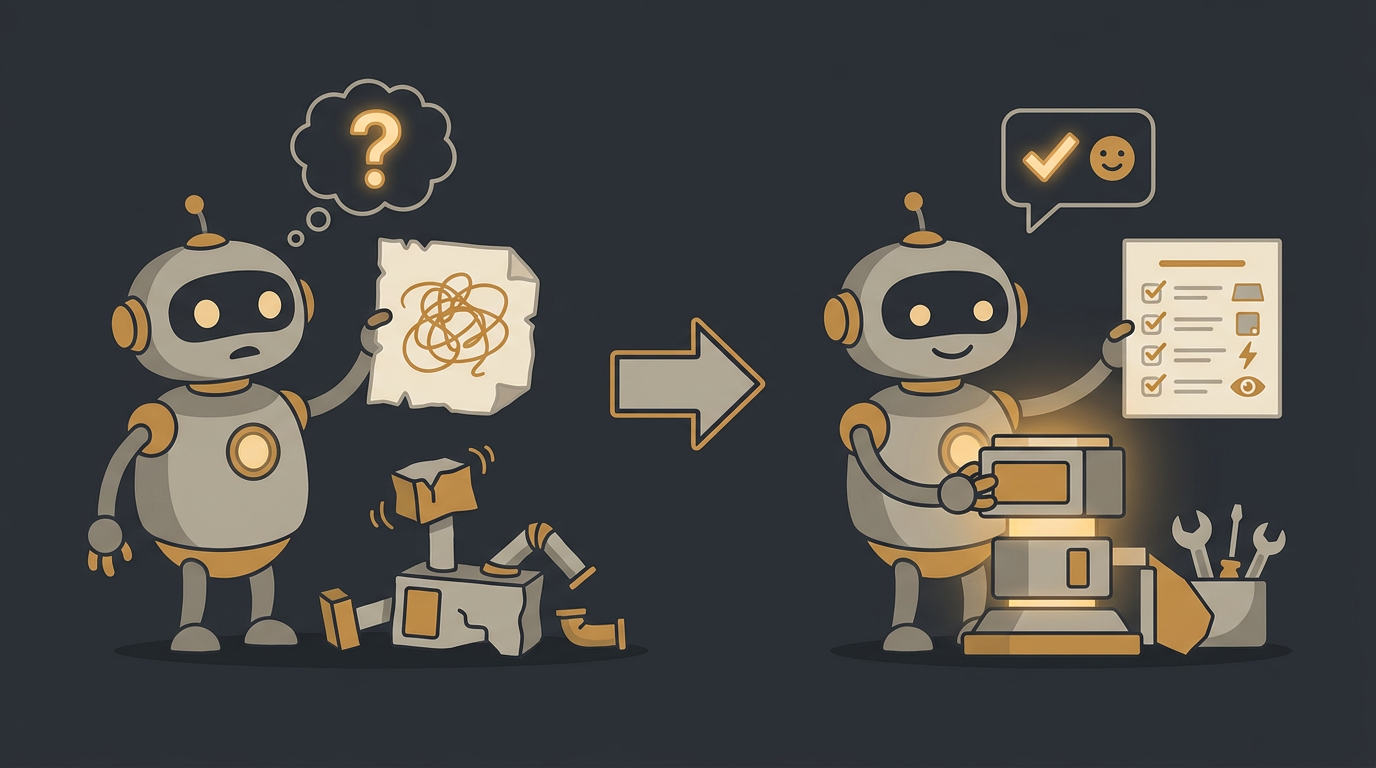
Now picture the same task with a prompt that spelled out the actual bug, the file it lived in, the fix you had in mind, and the things to leave alone. Same model, same afternoon — except this time it ships on the first try. The difference wasn't talent or luck. It was the prompt.
Good prompts aren't magic — they're just thorough
You can usually feel the difference between a good prompt and a sloppy one, even if it's hard to put into words. A good prompt leaves nothing important to chance. It's clear about what you want. It says what "finished" actually means. And it draws a line around what's off-limits, so the agent doesn't wander.
A vague prompt does the opposite: it hands the model a pile of blanks and lets it fill them in. Sometimes you get lucky. Often you get something that compiles, looks plausible, and is wrong in a way that takes half an hour to discover.
None of this is exotic. It's the same care a good engineer takes when writing a clear ticket for a teammate. The hard part isn't knowing what "good" looks like — it's doing it, fully, every single time, when you're tired and the deadline is now.
That's the part worth automating
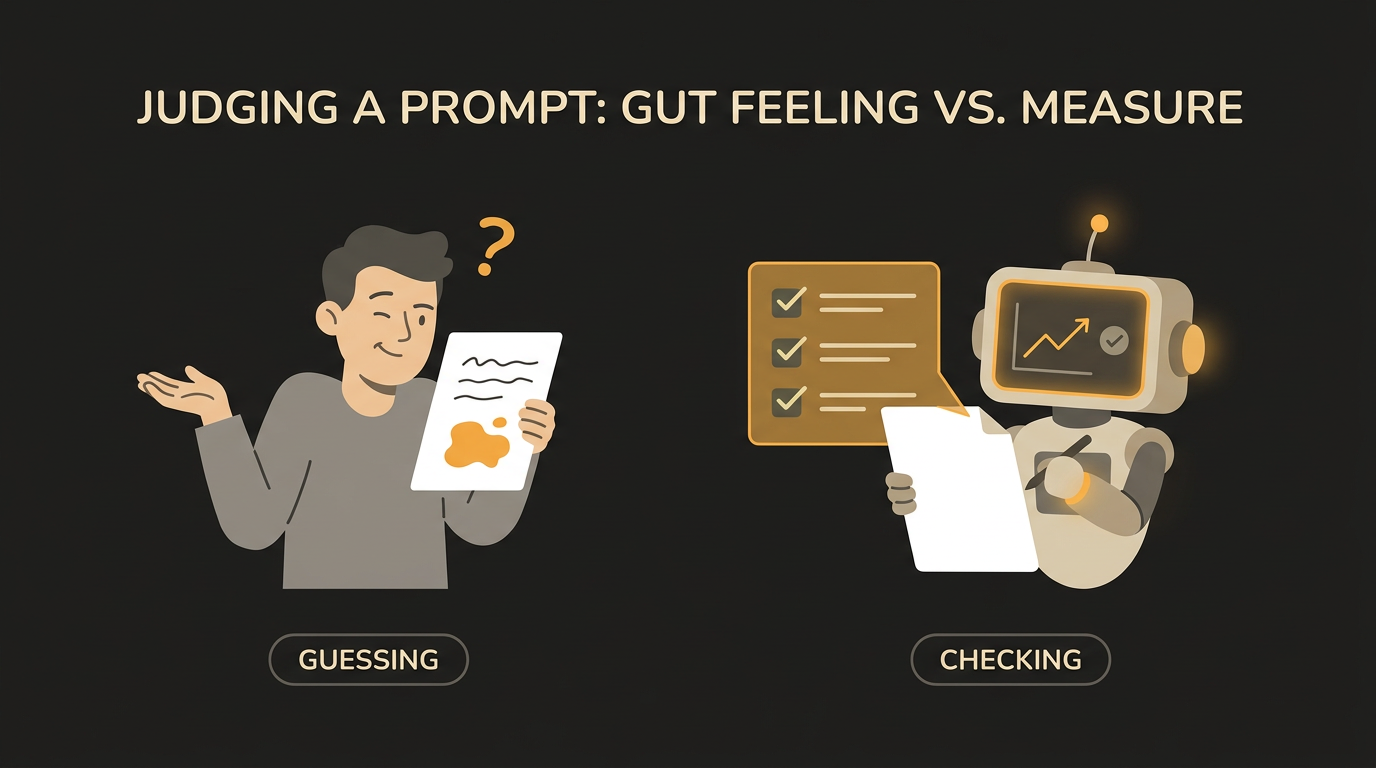
This is exactly the gap AgentForge closes. You hand it the rough request — the one-liner you'd normally fire off and regret — and it does the work of turning it into the thorough version. Behind the scenes it looks at your prompt from many angles and weighs it against what's actually worked across more than 1,000 real coding cases, the way a careful senior engineer reviews a ticket before it goes in.
What you get back isn't a vibe check. It's a prompt that's been measured against a high bar and only handed over once it clears it. The result is the part that matters: you stop thinking about prompt quality, and just get prompts that work.
So next time your coding agent does something baffling, don't assume it got dumber. Odds are the prompt left it room to guess. Take that room away — by hand if you enjoy the craft, or let AgentForge do it for you.